
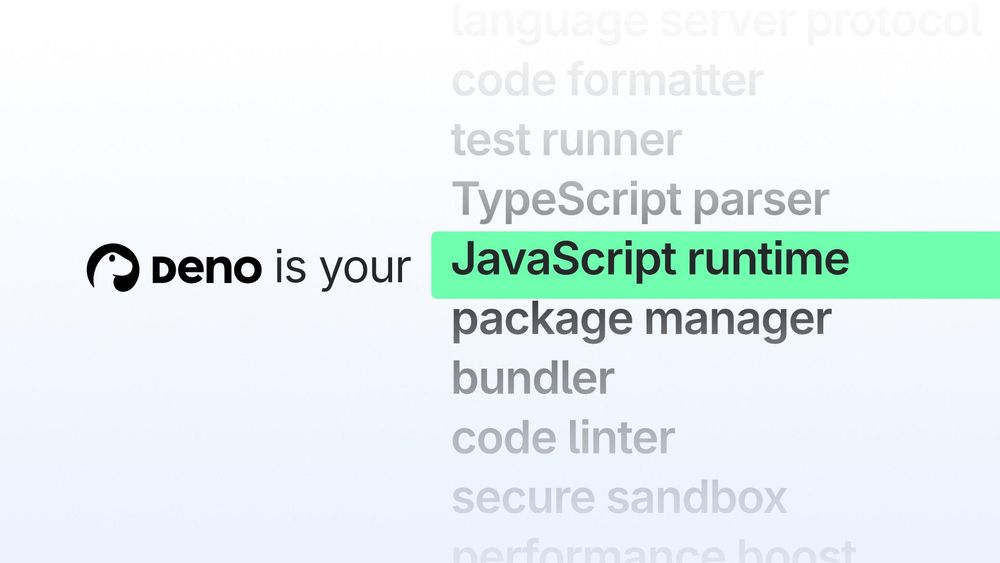
Deno is an open-source JavaScript, TypeScript and WebAssembly runtime that runs TypeScript natively, is secure by default, and includes a formatter, linter, test runner and other tools out of the box.
Deno was created by Ryan Dahl, the original creator of Node.js, to fix Node's design shortcomings. Deno 2 added strong Node.js and npm compatibility, so existing packages work. The company also runs Deno Deploy, a serverless hosting platform for JavaScript apps.
Key features
- Native TypeScript and JSX support with no build step
- Secure by default with explicit permissions for files, network and environment
- Built-in formatter, linter, test runner and benchmarking
- Node.js and npm compatibility
- Web-standard APIs such as fetch and Web Streams
- Compile scripts into standalone executables
- Deno Deploy for serverless hosting, plus Deno Sandbox and Subhosting
Who it's for
Deno is for JavaScript and TypeScript developers building servers, CLIs and scripts who want modern defaults and less tooling setup, as well as platforms that need to run untrusted user code.
Common use cases
- Building APIs and web servers in TypeScript
- Writing scripts and CLIs compiled to single binaries
- Deploying edge functions on Deno Deploy
- Running user code securely with Subhosting or Sandbox
Pricing
The Deno runtime is free and open source. Deno Deploy, per its pricing page:
- Free: $0 per month, with 1M requests per month.
- Pro: $20 per month, with 5M requests and team features.
- Builder: $200 per month, for Subhosting users and growing platforms.
- Enterprise: custom pricing.
Alternatives
- Bun: fast all-in-one JavaScript runtime and toolkit
- Node.js: the original server-side JavaScript runtime
- Cloudflare Workers: edge serverless platform
FAQ
Is Deno free?
Yes. The Deno runtime is free and open source, and Deno Deploy has a free tier.
What is Deno used for?
Deno is used to run JavaScript and TypeScript for servers, APIs, scripts and CLIs, and to deploy them with Deno Deploy.
Deno vs Node.js: what's the difference?
Deno runs TypeScript natively, is secure by default and includes built-in tooling, while Node.js has the largest ecosystem. Deno 2 can run most npm packages.
Deno vs Bun: which is faster?
Both are modern runtimes focused on speed. Bun emphasizes raw performance and an all-in-one toolkit, while Deno emphasizes security and web standards; benchmarks vary by workload.
Can Deno use npm packages?
Yes. Deno supports npm packages and Node.js built-in modules.
Who created Deno?
Deno was created by Ryan Dahl, who also created Node.js.