
Short answer: For most RAG and AI side projects in 2026, Chroma and Qdrant are the best free open-source vector databases, Weaviate and Pinecone have the friendliest free managed tiers, and Supabase (pgvector) is the easiest pick if you already want Postgres. Upstash Vector, Turso and Convex are great when you want vector search inside a serverless or full-stack backend.
Last updated: October 2026
How we picked these tools
We looked at every database on TrendingDevTools that offers vector or similarity search and kept the 8 that a solo developer or small team can start on for free, either self-hosted open source or a free managed tier. Then we checked each vendor's own pricing page and GitHub repo in October 2026 for free-tier limits, starting prices and licenses. Limits change often, so we link each source and say "check site" where something isn't clear.
Comparison table
- Chroma: Best for: Getting a RAG prototype running fast; Pricing model / starting price: Open source; Cloud Starter $0/month + usage with $5 free credits; Open source?: Yes (Apache-2.0); Key strength: Vector, full-text, regex and metadata search in one place
- Qdrant: Best for: Fast, production-grade vector search you can self-host; Pricing model / starting price: Open source; Cloud free tier forever (1 GB RAM, 4 GB disk); Open source?: Yes (Apache-2.0); Key strength: Rust engine with hybrid search and filtering during search
- Weaviate: Best for: RAG apps that want built-in embeddings and an AI query agent; Pricing model / starting price: Free Forever cloud (100,000 objects, no card); Flex from $45/month; Open source?: Yes (BSD-3-Clause); Key strength: Vector search, RAG and memory in one open-source platform
- Pinecone: Best for: A fully managed vector database with zero ops; Pricing model / starting price: Free Starter plan; Builder $20/month flat; Open source?: No; Key strength: Fully managed on AWS, GCP and Azure, with dense, sparse and full-text indexes
- Supabase (pgvector): Best for: Apps that already use (or want) Postgres; Pricing model / starting price: Free plan (500 MB database, 2 active projects); Pro from $25/month; Open source?: Yes (Apache-2.0); Key strength: pgvector inside full Postgres, plus auth, storage and APIs
- Upstash Vector: Best for: Serverless and edge apps with spiky traffic; Pricing model / starting price: Free (10K queries/updates per day); pay as you go $0.40 per 100K requests; Open source?: No (client SDKs are open source); Key strength: Serverless, pay-per-request vector search
- Turso: Best for: SQLite fans and per-user or per-agent databases; Pricing model / starting price: Free ($0/month: 100 databases, 5 GB storage); Developer $4.99/month; Open source?: Yes (MIT); Key strength: SQLite-compatible database with built-in vector search
- Convex: Best for: TypeScript full-stack apps that need vector search built in; Pricing model / starting price: Free & Starter $0/month + pay as you go; Professional $25/developer/month; Open source?: Self-hostable open-source backend (check license); Key strength: Reactive database, functions, text and vector search in one TypeScript stack
Prices and free-tier limits are from each vendor's official site, checked in October 2026. Always check the vendor's site for the latest.
1. Chroma
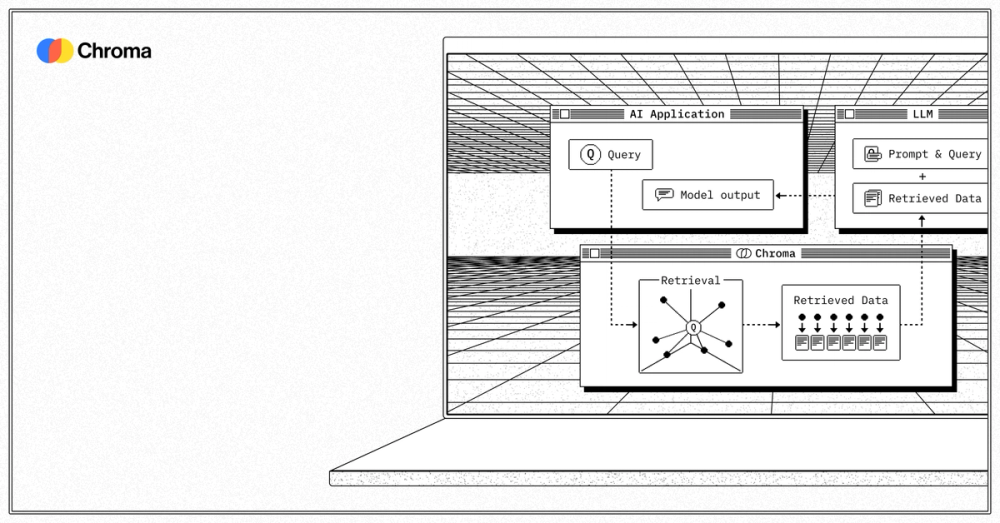
Best for: Getting a RAG prototype running fast Pricing: Open source; Cloud Starter $0/month + usage with $5 free credits Open source: Yes (Apache-2.0)
Chroma is open-source search infrastructure for AI, licensed Apache 2.0, with SDKs for Python, TypeScript and Rust. It combines vector, full-text, regex and metadata search. You can run it yourself for free, or use Chroma Cloud, whose Starter plan is $0/month plus usage and comes with $5 in free credits. It's one of the quickest ways to get a RAG demo working.
See the Chroma listing on TrendingDevTools · Official site
2. Qdrant
Best for: Fast, production-grade vector search you can self-host Pricing: Open source; Cloud free tier forever (1 GB RAM, 4 GB disk) Open source: Yes (Apache-2.0)
Qdrant is an open-source vector search engine written in Rust (Apache 2.0). It supports dense and sparse vectors, hybrid search, and rich JSON metadata filters. Qdrant Cloud has a free-forever tier with a single-node cluster (0.5 vCPU, 1 GB RAM, 4 GB disk), which is plenty for prototypes. Pick it when you care about speed and want the option to self-host later.
See the Qdrant listing on TrendingDevTools · Official site
3. Weaviate
Best for: RAG apps that want built-in embeddings and an AI query agent Pricing: Free Forever cloud (100,000 objects, no card); Flex from $45/month Open source: Yes (BSD-3-Clause)
Weaviate is an open-source AI database (BSD-3-Clause) that brings vector search, RAG and memory together. It can generate embeddings for you, and its Query Agent turns plain-language questions into database queries. The managed Free Forever plan needs no credit card and covers 1 cluster with up to 100,000 objects. Paid Flex plans start at $45/month.
See the Weaviate listing on TrendingDevTools · Official site
4. Pinecone
Best for: A fully managed vector database with zero ops Pricing: Free Starter plan; Builder $20/month flat Open source: No
Pinecone is a fully managed vector database, so there are no servers or clusters to run. Its Starter plan is free and includes dense, sparse and full-text indexes. The new Builder plan for solo developers and small teams is $20/month flat. It's the simplest choice if you just want a hosted API and don't need open source.
See the Pinecone listing on TrendingDevTools · Official site
5. Supabase (pgvector)
Best for: Apps that already use (or want) Postgres Pricing: Free plan (500 MB database, 2 active projects); Pro from $25/month Open source: Yes (Apache-2.0)
Supabase is an open-source Postgres platform, and Supabase Vector uses pgvector to store, index and query embeddings right next to the rest of your data. The Free plan includes a 500 MB database and up to 2 active projects; free projects pause after a week of inactivity. Pro starts at $25/month. It's ideal when you want one backend for users, data and vectors.
See the Supabase (pgvector) listing on TrendingDevTools · Official site
6. Upstash Vector
Best for: Serverless and edge apps with spiky traffic Pricing: Free (10K queries/updates per day); pay as you go $0.40 per 100K requests Open source: No (client SDKs are open source)
Upstash Vector is a serverless vector database built for high-performance vector search, part of the same platform as Upstash Redis and QStash. The free plan allows 10K queries or updates per day, and pay-as-you-go is $0.40 per 100K requests. It's a great match for serverless apps where you don't want to pay for idle time.
See the Upstash Vector listing on TrendingDevTools · Official site
7. Turso
Best for: SQLite fans and per-user or per-agent databases Pricing: Free ($0/month: 100 databases, 5 GB storage); Developer $4.99/month Open source: Yes (MIT)
Turso is a SQLite-compatible database (the core is MIT licensed) built for running many small databases, such as one per user or one per agent. Its listing highlights built-in vector search for AI and RAG with no extra extensions. The Free plan includes 100 databases and 5 GB of storage with no credit card, and Developer is $4.99/month. Choose it if you love SQLite's simplicity.
See the Turso listing on TrendingDevTools · Official site
8. Convex
Best for: TypeScript full-stack apps that need vector search built in Pricing: Free & Starter $0/month + pay as you go; Professional $25/developer/month Open source: Self-hostable open-source backend (check license)
Convex is a reactive backend platform with a database, serverless functions, real-time sync, file storage, text search and vector search, all in TypeScript. The Free & Starter plan includes vector search and is $0/month plus pay as you go. Convex also says you can self-host and develop locally. It's perfect if you want your AI features to live in the same codebase as the rest of your app.
See the Convex listing on TrendingDevTools · Official site
FAQ
What is the best free vector database for RAG?
For a self-hosted open-source option, Chroma (Apache-2.0) and Qdrant (Apache-2.0) are the most popular starting points. For a free managed service, Weaviate's Free Forever plan (100,000 objects) and Pinecone's free Starter plan are easy to begin with.
Can I use Postgres as a vector database?
Yes. Supabase Vector uses the pgvector extension to store, index and query embeddings inside Postgres, so your vectors sit next to your normal app data. Supabase's free plan includes a 500 MB database.
Which vector databases are open source?
Chroma (Apache-2.0), Qdrant (Apache-2.0), Weaviate (BSD-3-Clause), Supabase (Apache-2.0) and Turso (MIT) are open source. Convex says its backend can be self-hosted; check its license for details. Pinecone and Upstash Vector are managed services.
What's the cheapest vector database for a serverless app?
Upstash Vector has a free plan (10K queries or updates per day) and then charges $0.40 per 100K requests, so you only pay for what you use. Turso's paid plan starts at $4.99/month.
Do I need a dedicated vector database for a small project?
Often not. If your app already uses Postgres, SQLite or a full-stack backend, Supabase (pgvector), Turso or Convex let you add vector search without running another service. Dedicated engines like Qdrant, Weaviate, Chroma and Pinecone are worth it once search quality and scale matter more.
Building a database, AI tool or dev tool? You can list it on TrendingDevTools for free so developers comparing options like these can find it.
Last updated: October 2026