

What is Wellness Whizz?
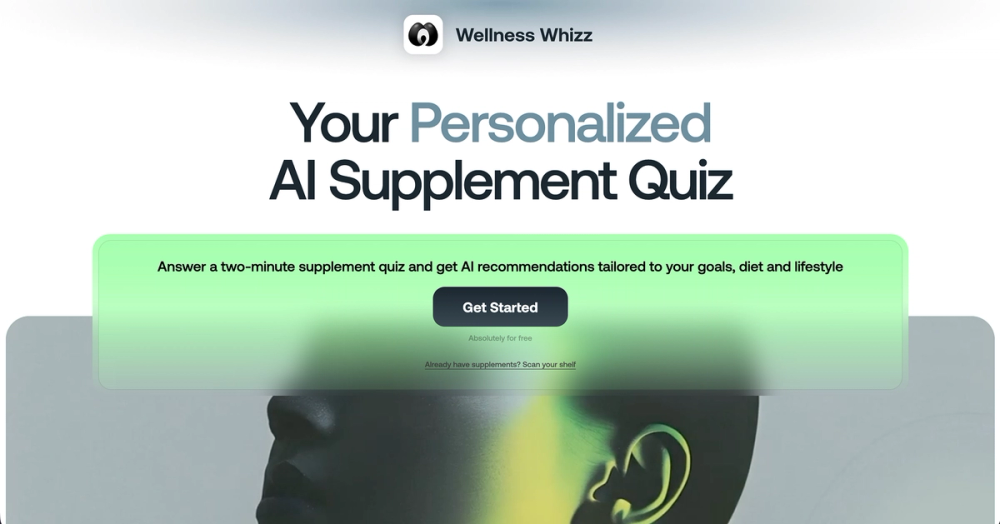
Wellness Whizz is a free AI supplement advisor that turns a two-minute questionnaire into a short list of supplements matched to a person's goals, diet, lifestyle and health profile. It is run by a small independent team in Spain and organised around a catalogue of more than 140 supplements. The problem it solves is conflicting supplement advice: instead of reading scattered product pages, users answer a structured quiz and get three to five explained suggestions, with safety notes and links to the evidence.
Key features
- Two-minute quiz. Questions cover goals, diet, lifestyle, health conditions and supplements already taken, and no account is needed.
- Curated catalogue. More than 140 supplements carry safety and effectivity scores, FDA status, contraindications and interaction notes.
- Short explained list. Results contain three to five supplements, each with a reason written for the user's answers and a link to the full guide.
- Evidence links. Supplement pages link to peer-reviewed studies, list dosage guidance and show the date of the last editorial review.
- Research notes. A weekly section summarises new human trials and reviews from PubMed in plain language, with a link to each paper.
Who is Wellness Whizz for?
People who are considering a supplement and want a structured starting point before buying, especially those who already take several products and want to check overlap or interactions. It suits general readers who want plain-language summaries of the evidence, and it is useful for people following a vegan, vegetarian, keto or high-protein diet who want to see which nutrients may need attention. It is not a medical service and is not a substitute for advice from a doctor, pharmacist or dietitian.
Use cases
- Getting a short supplement list for goals such as sleep, energy, joint health or workout recovery.
- Checking which supplements might interact with a current medication or health condition.
- Scanning an existing shelf to see what is already covered.
- Reading a plain-language summary of a new trial before buying a product.
Pricing
Wellness Whizz is free. It has no accounts and no paywall, and the quiz and supplement guides can be used without payment. The site is funded by the iHerb referral programme: product links carry a referral code and iHerb pays a small commission, while the buyer pays the same price. Commissions do not influence recommendations or ratings. See the official Wellness Whizz site.
What's new
On 26 October 2026, Wellness Whizz published a dosage guide to beta-alanine covering daily amounts, how to split doses and how to reduce tingling. On 17 October 2026, it published an analysis of 226 supplement plans from its advisor, showing which supplements were most recommended by goal, age, sex and diet. Read the beta-alanine guide and the 226-plan analysis.
Getting started
- Open the Wellness Whizz quiz.
- Answer the questions about goals, diet, lifestyle and health.
- Review the three to five recommendations and open any supplement page for doses, interactions and studies.
- If you already take supplements, use the shelf scan to check them.
Alternatives
No directly similar supplement advisor is listed on this site yet. For general research, read the Wellness Whizz research notes alongside advice from a pharmacist or doctor.
FAQ
Is Wellness Whizz free?
Yes. The quiz, supplement guides and research notes are free, with no account or paywall. The site is funded by iHerb referral commissions.
What is Wellness Whizz used for?
Wellness Whizz is used to get a short, explained list of supplements based on a person's goals, diet and health profile, and to read evidence summaries about individual supplements.
Is Wellness Whizz medical advice?
No. It is an information site, not a medical service. Its pages advise users to check with a pharmacist or doctor before starting, stopping or combining supplements, especially during pregnancy, for children or alongside medication.
How does Wellness Whizz rate supplements?
Each supplement gets an effectivity score and a safety score from one to five, plus an FDA status. The effectivity score reflects the strength and consistency of human evidence, while the safety score reflects caution needed at typical doses.


