
Short answer: The best free LLM observability tools in 2026 are Langfuse and Arize Phoenix if you want open-source tracing and evals you can self-host, and LangSmith if you build with LangChain or LangGraph. PostHog, Sentry, Grafana Cloud and SigNoz are strong picks when you want AI monitoring next to your product analytics, errors or infrastructure data, and OpenTelemetry is the free standard that ties them together.
Last updated: October 26, 2026
LLM observability means tracing every prompt, response, tool call and cost inside your AI app or agent so you can debug bad answers and control spend. Below are 8 free LLM observability tools listed on TrendingDevTools, with what each one does, who it suits and what the free tier includes.
How we picked these tools
Every tool here is already listed on TrendingDevTools in the Analytics and Monitoring category. We checked each vendor's own website and pricing page on October 26, 2026 for the free tier and starting price. Where a vendor does not publish a number, we leave it out instead of guessing.
1. Langfuse
Langfuse is an open-source platform to trace, evaluate and improve LLM apps and AI agents. It covers tracing, prompt management, evaluations and datasets, and you can use Langfuse Cloud or host it yourself.
- Best for: Teams that want open-source LLM tracing and evals with the option to self-host
- Free tier: Hobby plan is free with 50k units per month, 30 days of data access and 2 users, no credit card required
- Paid plans: Core from $29/month, Pro from $199/month
- Website: langfuse.com
2. LangSmith

LangSmith is the observability and evaluation platform from LangChain. It traces agent runs, runs evaluations and helps you deploy agents, and it works with or without the LangChain framework.
- Best for: Developers building with LangChain or LangGraph who want tracing built in
- Free tier: Developer plan is $0 for 1 seat with up to 5k base traces per month, then pay as you go
- Paid plans: Plus at $39 per seat per month with up to 10k base traces per month
- Website: langchain.com/langsmith
3. Arize Phoenix
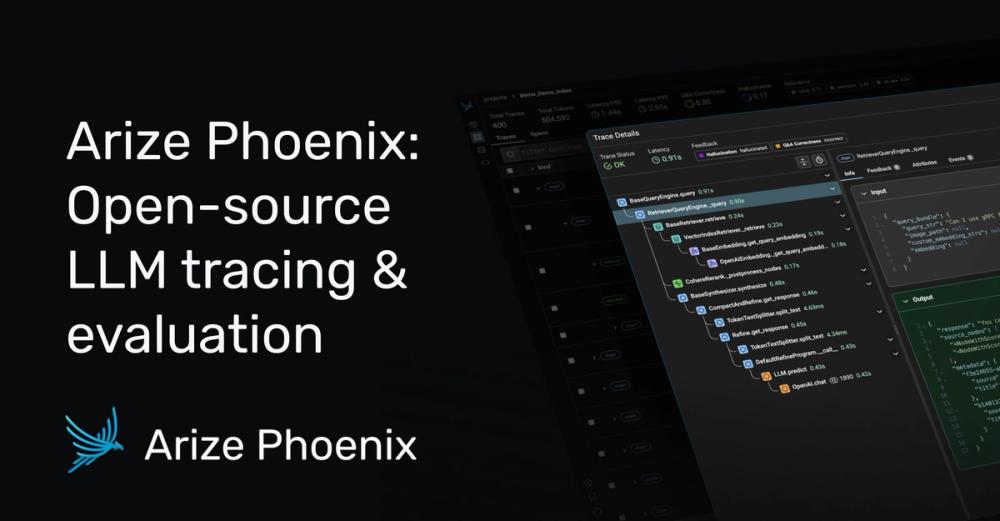
Arize Phoenix is an open-source tool from Arize to trace, evaluate and improve AI agents. You can start it locally with one command (uvx arize-phoenix serve) or self-host it in your own environment.
- Best for: Running LLM tracing and evals locally during development
- Free tier: Free to run locally or self-host; Arize also offers a cloud platform you can start for free
- Website: phoenix.arize.com
4. PostHog
PostHog is a product analytics suite that also includes AI observability, so you can see LLM calls next to user behavior, session replays and feature flags.
- Best for: Product teams that want LLM monitoring and product analytics in one place
- Free tier: Every month includes 100K AI observability events, plus 1M analytics events and 5K session recordings, with no credit card required
- Website: posthog.com
5. Sentry
Sentry is an error monitoring and tracing platform. It helps you catch the exceptions and slow requests around your AI features, not only in the model calls themselves.
- Best for: Solo developers who want errors and traces from their AI app in a tool they may already use
- Free tier: Developer plan is $0 for one user with error monitoring, tracing and email alerts
- Paid plans: Team from $26/month, Business from $80/month (billed annually)
- Website: sentry.io
6. Grafana Cloud
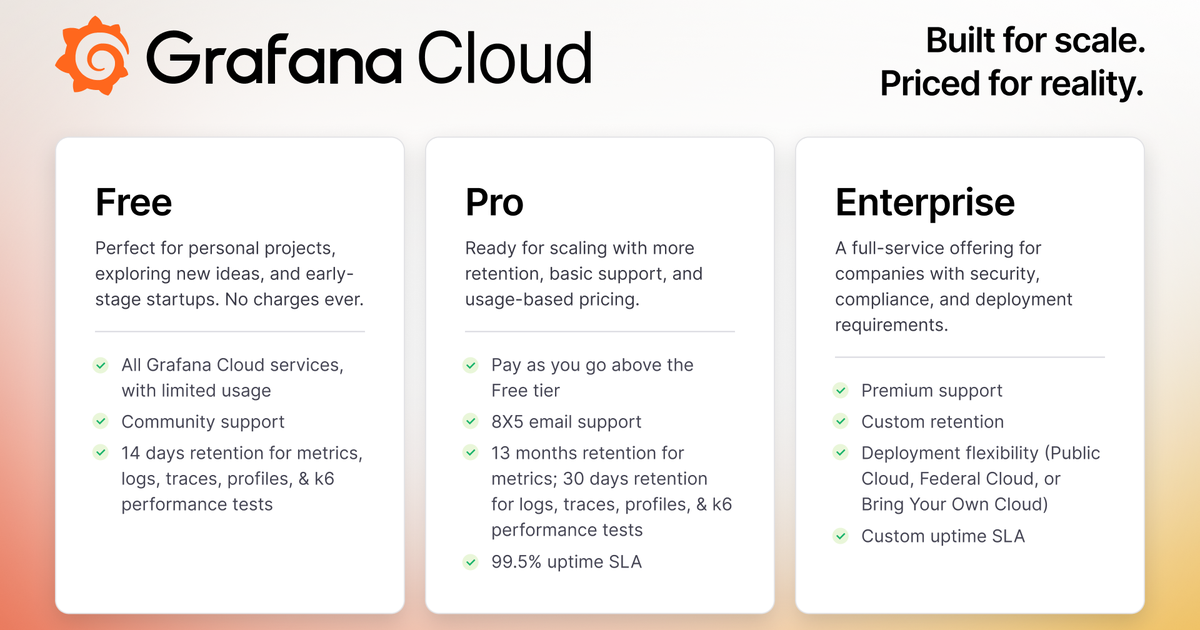
Grafana Cloud is a managed observability stack for metrics, logs, traces and profiles. It is a good home for LLM telemetry if your infrastructure data already lives in Grafana.
- Best for: Teams that want LLM traces next to infrastructure metrics and logs
- Free tier: Always free plan at $0 with access to all Grafana Cloud services within usage limits and 14 days of retention
- Paid plans: Pro from $19/month plus usage
- Website: grafana.com
7. SigNoz
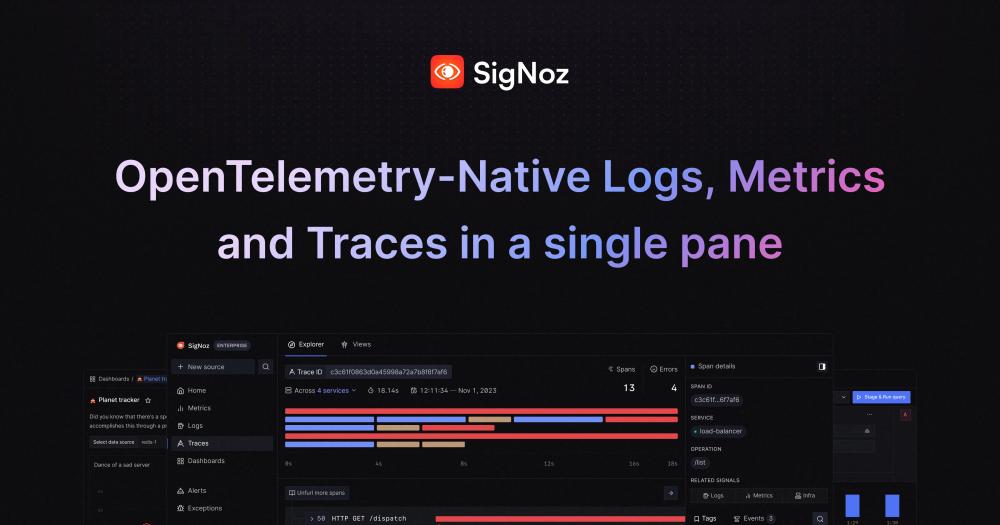
SigNoz is an OpenTelemetry-native observability platform for logs, traces and metrics. It is open source, so you can self-host it, or use SigNoz Cloud.
- Best for: Teams that want one OpenTelemetry-based backend for app and LLM traces
- Free tier: Self-host the open-source version; SigNoz Cloud offers a free trial
- Paid plans: SigNoz Cloud Teams starts at $49/month, which includes $49 of usage
- Website: signoz.io
8. OpenTelemetry
OpenTelemetry is the open-source, vendor-neutral standard for collecting traces, metrics and logs. It is not a dashboard on its own. Instead, it lets you instrument your LLM app once and send the data to any backend on this list.
- Best for: Avoiding lock-in by instrumenting once and choosing a backend later
- Free tier: Fully free and open source
- Website: opentelemetry.io
Quick comparison
- Langfuse: open source, self-hostable, free Hobby cloud plan with 50k units per month
- LangSmith: free Developer plan with 5k base traces per month, best fit for LangChain users
- Arize Phoenix: open source, free to run locally or self-host
- PostHog: 100K free AI observability events per month alongside product analytics
- Sentry: free single-user plan for errors and tracing
- Grafana Cloud: always-free plan across metrics, logs and traces with usage limits
- SigNoz: open source and OpenTelemetry native, cloud from $49/month
- OpenTelemetry: free standard to instrument once and send data anywhere
Which free LLM observability tool should you choose?
If you want a dedicated LLM tool, start with Langfuse or Arize Phoenix for open source, or LangSmith if your stack is LangChain. If you already use PostHog, Sentry or Grafana, turn on their AI or tracing features before adding another tool. Whatever you pick, instrumenting with OpenTelemetry keeps you free to switch later.
Looking for more? Browse AI coding tools, testing tools or our guide to free vector databases for RAG.
FAQ
What is LLM observability?
LLM observability is tracking what happens inside an AI app: the prompts sent, the model responses, tool calls, latency, token usage and cost. It helps you find why an answer was wrong and where money is being spent.
What is the best free LLM observability tool?
For a dedicated, open-source option, Langfuse and Arize Phoenix are the most popular free choices. LangSmith has a free Developer plan that suits LangChain users.
Can I self-host an LLM observability tool?
Yes. Langfuse, Arize Phoenix and SigNoz can all be self-hosted, and OpenTelemetry is open source, so your trace data can stay on your own servers.
Do I need OpenTelemetry for LLM monitoring?
No, but it helps. Most tools here offer their own SDKs, and using OpenTelemetry means you can send the same traces to a different backend later without rewriting your code.
Is LangSmith only for LangChain apps?
No. LangSmith works with LangChain and LangGraph out of the box, but you can also trace apps that do not use LangChain.
How is LLM observability different from regular APM?
Regular APM tools track requests, errors and server performance. LLM observability adds AI-specific data such as prompts, completions, token costs and evaluation scores. Tools like Sentry, Grafana Cloud and SigNoz cover the APM side, while Langfuse, LangSmith and Phoenix focus on the LLM side.